- Windows 10 remote desktop connection with Ipad Pro I am attempting to connect my Ipad PRO via cellular data to my Windows 10 PC, which is wired into my home Linksys AC1200 smart wi-fi router. I have installed the RD Client on my IPAD, and gone through the steps on both my IPAD and the Windows 10 PC.
- Jul 12, 2017 Remote Desktop, while not as quick to set up as something like TeamViewer, gives a really smooth experience that’s well worth the work if you have a mostly-Windows household. So, we’ll be using the Remote Desktop server built into Windows Pro and Enterprise and the Microsoft Remote Desktop client for iOS 8 or later.
Applies to: Windows 10, Windows 8.1, Windows Server 2019, Windows Server 2016, Windows Server 2012 R2
Nov 29, 2019 Microsoft Remote Desktop is a service that allows users to access and use their computer through another device, such as an iPhone or iPad. The iOS app, which had been abandoned for over a year.
You can use the Remote Desktop client for iOS to work with Windows apps, resources, and desktops from your iOS device (iPhones and iPads).
Use the following information to get started. Be sure to check out the FAQ if you have any questions.
Note
- Curious about the new releases for the iOS client? Check out What's new for Remote Desktop on iOS?.
- The iOS client supports devices running iOS 6.x and newer.
Get the Remote Desktop client and start using it

This section will tell you how to download and set up the Remote Desktop client for iOS.
Download the Remote Desktop client from the iOS store
First you'll need to download the client and configure your PC to connect to remote resources.
To download the client:
- Download the Microsoft Remote Desktop client from the iOS App Store or iTunes.
- Set up your PC to accept remote connections.
Add a PC
After you've downloaded the client and configured your PC to accept remote connections, it's time to actually add a PC.
To add a PC:
- In the Connection Center, tap +, then tap Add PC.
- Enter the following information:
- PC name – the name of the computer. The PC name can be a Windows computer name, an Internet domain name, or an IP address. You can also append port information to the PC name (for example, MyDesktop:3389 or 10.0.0.1:3389).
- User name – The user name you'll use to access the remote PC. You can use the following formats: user_name, domainuser_name, or
user_name@domain.com. You can also select Ask when required to be prompted for a user name and password when necessary.
- You can also set the following additional options:
- Friendly name (optional) – An easy-to-remember name for the PC you're connecting to. You can use any string, but if you don't specify a friendly name, the PC name is displayed instead.
- Gateway (optional) – The Remote Desktop gateway that you want to use to connect to virtual desktops, RemoteApp programs, and session-based desktops on an internal corporate network. Get the information about the gateway from your system administrator.
- Sound – Select the device to use for audio during your remote session. You can choose to play sound on the local devices, the remote device, or not at all.
- Swap mouse buttons – Whenever a mouse gesture would send a command with the left mouse button, it sends the same command with the right mouse button instead. Swapping mouse buttons is necessary if the remote PC is configured for left-handed mouse mode.
- Admin Mode - Connect to an administration session on a server running Windows Server 2003 or later.
- Clipboard - Choose whether to redirect text and images in your clipboard to your PC.
- Storage - Choose whether to redirect storage to your PC.
- Tap Save.
Need to edit these settings? Press and hold the desktop you want to edit, then tap the settings icon.
Add a workspace
To get a list of managed resources you can access on your iOS, add a workspace by subscribing to the feed provided by your admin.
To add a workspace:
- On the Connection Center screen, tap +, and then tap Add workspace.
- In the Feed URL field, enter the URL for the feed you want to add. This URL can be either a URL or an email address.
- If you use a URL, use the one your admin gave you.
- This URL is usually a Windows Virtual Desktop URL. Which one you use depends on which version of Windows Virtual Desktop you're using.
- For Windows Virtual Desktop (classic), use
https://rdweb.wvd.microsoft.com/api/feeddiscovery/webfeeddiscovery.aspx. - For Windows Virtual Desktop, use
https://rdweb.wvd.microsoft.com/api/arm/feeddiscovery.
- For Windows Virtual Desktop (classic), use
- This URL is usually a Windows Virtual Desktop URL. Which one you use depends on which version of Windows Virtual Desktop you're using.
- If you use an email address, enter your email address. Entering your email address tells the client ot search for a URL associated with your email address if your admin configured the server that way.
- If you use a URL, use the one your admin gave you.
- Tap Next.
- Provide your credentials when prompted.
- For User name, give the user name of an account with permission to access resources.
- For Password, give the password for the account.
- You may also be prompted to give additional information depending on the settings your admin configured authentication with.
- Tap Save.
After you've finished, the Connection Center should display the remote resources.
Once subscribed to a feed, the feed content will update automatically on a regular basis. Resources may be added, changed, or removed based on changes made by your administrator.
Manage your user accounts
When you connect to a PC or workspace, you can save the user accounts to select from again.
To create a new user account:
- In the Connection Center, tap Settings, and then tap User Accounts.
- Tap Add User Account.
- Enter the following information:
- User Name - The name of the user to save for use with a remote connection. You can enter the user name in any of the following formats:
user_name,domainuser_name, oruser_name@domain.com. - Password - The password for the user you specified.
- User Name - The name of the user to save for use with a remote connection. You can enter the user name in any of the following formats:
- Tap Save.
To delete a user account:
- In the Connection Center, tap Settings, and then tap User Accounts.
- Select the account you would like to delete.
- Tap Delete.
Connect to an RD Gateway to access internal assets
A Remote Desktop Gateway (RD Gateway) lets you connect to a remote computer on a corporate network from anywhere on the Internet. You can create and manage your gateways using the Remote Desktop client.
To set up a new gateway:
- In the Connection Center, tap Settings > Gateways.
- Tap Add gateway.
- Enter the following information:
- Gateway name – The name of the computer you want to use as a gateway. The gateway name can be a Windows computer name, an Internet domain name, or an IP address. You can also add port information to the server name (for example, RDGateway:443 or 10.0.0.1:443).
- User name - The user name and password to be used for the Remote Desktop gateway you're connecting to. You can also select Use connection credentials to use the same user name and password that you used for the remote desktop connection.
Navigate the Remote Desktop session
This section describes tools you can use to help navigate your Remote Desktop session.
Start a Remote Desktop connection
- Tap the remote desktop connection to start the remote desktop session.
- If you're asked to verify the certificate for the remote desktop, tap Accept. To accept by default, set Don't ask me again for connections to this computer to On.
Connection bar

The connection bar gives you access to additional navigation controls.
- Pan Control: The pan control enables the screen to be enlarged and moved around. Pan control is only available using direct touch.
- To enable or disable the pan control, tap the pan icon in the connection bar to display the pan control. The screen will zoom in while the pan control is active. the pan icon in the connection bar again to hide the control and return the screen to its original resolution.
- To use the pan control, tap and hold the pan control. While holding, drag your fingers in the direction you want to move the screen.
- To move the pan control, double-tap and hold the pan control to move the control on the screen.
- Connection name: The current connection name is displayed. Tap the connection name to display the session selection bar.
- Keyboard: Tap the keyboard icon to display or hide the keyboard. The pan control is displayed automatically when the keyboard is displayed.
- Move the connection bar: Tap and hold the connection bar. While holding the bar, drag it over to its new location. Let go of the bar to place it at the new location.
Session selection
You can have multiple connections open to different PCs at the same time. Tap the connection bar to display the session selection bar on the left-hand side of the screen. The session selection bar enables you to view your open connections and switch between them.
Remote Desktop On Ipad Pro
Here's what you can do with the session selection bar:
- To switch between apps in an open remote resource session, tap the expander menu and choose an app from the list.
- Tap Start New to start a new session, then choose a session from the list of available sessions.
- Tap the X icon on the left side of the session tile to disconnect from your session.
Command bar
The command bar replaced the Utility bar starting in version 8.0.1. You can use the command bar to switch between mouse modes and return to the connection center.
Use touch gestures and mouse modes in a remote session
The client uses standard touch gestures. You can also use touch gestures to replicate mouse actions on the remote desktop. The mouse modes available are defined in the table below.
Note
In Windows 8 or later, the native touch gestures are supported in Direct Touch mode. For more information on Windows 8 gestures, see Touch: Swipe, tap, and beyond.
| Mouse mode | Mouse operation | Gesture |
|---|---|---|
| Direct touch | Left-click | Tap with one finger |
| Direct touch | Right-click | Tap and hold with one finger |
| Mouse pointer | Left-click | Tap with one finger |
| Mouse pointer | Left-click and drag | Tap and hold with one finger, then drag |
| Mouse pointer | Right-click | Tap with two fingers |
| Mouse pointer | Right-click and drag | Double-tap and hold with two fingers, then drag |
| Mouse pointer | Mouse wheel | Double-tap and hold with two fingers, then drag up or down |
| Mouse pointer | Zoom | With two fingers, pinch to zoom out and spread fingers apart to zoom in |
Supported input devices
The client has Bluetooth mouse support for iOS 13 and iPadOS as an accessibility feature. You can use Swiftpoint GT or ProPoint mice for deeper mouse integration. The client also supports external keyboards that are compatible with iOS and iPadOS.
For more information about device support, see What's new in the iOS client and the iOS App Store.
Microsoft Remote Desktop Ipad Download
Tip
Swiftpoint is offering an exclusive discount on the ProPoint mouse for iOS client users.
Use a keyboard in a remote session
You can use either an on-screen keyboard or physical keyboard in your remote session.
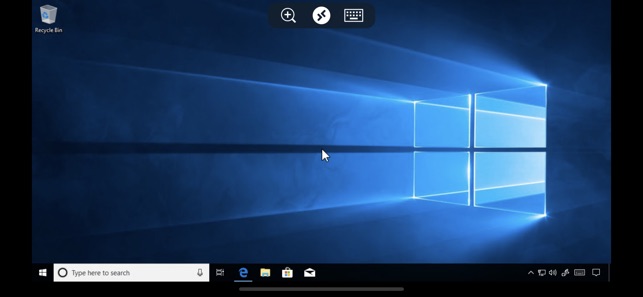
For on-screen keyboards, use the button on the right edge of the bar above the keyboard to switch between the standard and additional keyboard.
If Bluetooth is enabled on your iOS device, the client automatically detects the Bluetooth keyboard.
While certain key combinations might not work as expected in a remote session, many of the common Windows key combinations, such as CTRL+C, CTRL+V, and ALT+TAB will work.
Tip
Questions and comments are always welcome. However, if you post support requests or product feedback in this article's comments section, we won't be able to respond to your feedback. If you need help or want to troubleshoot your client, we highly recommend you go to the Remote Desktop client forum and start a new thread. If you have a feature suggestion, you can tell us using the Client UserVoice forum.
The iPad has quickly become a popular device among avid technology users and Luddites alike. With its whole host of applications and features, it can be used to carry out even complicated office tasks. However, if you use the iPad for business, it is rare it will completely replace your PC or laptop. It can be used on the go, but you may need to access files from your PC as the iPad has limited space. You may also simply want to stream a movie saved on your PC. Even if you are in the office and you want a file stored on your PC, you can access it from your iPad in a number of ways. This oneHOWTO article will tell you how to remotely access your PC from iPad so you can make the most out of all your devices.
Apps you can Download on your iPad
The most effective and intuitive way to access your PC or laptop from an iPad is to use a simple application. Some are free and some require a fee, but here are a few of the best:
- LogMeIn Ignition: This remote access application often becomes the main focus of those who already use LogMeIn for its other features. New users will also find it incredibly intuitive and pleasant. Download LogMeIn app on your iPad, create a LogMeIn account and log in to it. Once you login, you will see the desktop of your remote computer right on your iPad screen. You will also get a toolbar with every feature available on your computer. From this toolbar, you can do everything that you can do on your computer, such as controlling the keyboard, giving commands, customizing app controls, etc. For instance, you may even select whether a screen tap would mean a left click or a right click of the mouse. You may tap anywhere to click, or tap using two fingers for right click. You may also use the floating cursor controller for enhanced precision. Although the app is free, you can opt for a Pro subscription for extra features, such as HD quality, integrated file manager, better cloud app integration and others.
- TeamViewer HD: This iPad app works behind firewalls, allowing you to easily access your PC remotely. You don’t need to create an account, and you can run it without installing on your Windows as well. It works on Macs also. It is blessed with a number of features that are pretty much the same as on a desktop computer. One major benefit of this application is that it also has online collaboration capability. With this feature, you can not only access your computer from your iPad, but also work with your friends or team as if you are right next to them. It can automatically adjust your speed connection and change the resolution of your remote computer. The app is quite fast and can handle multiple monitors at a time. Perhaps the best thing is that this app is available for free to personal users.
- Splashtop Remote Desktop: This is probably the most intuitive and fastest remote access app for iPad users. For instance, tapping means clicking and tapping and dragging mimics dragging and dropping. With such controls, it is exactly what the users expect it to be. You get an on-screen keyboard just by clicking one button present on the bottom of your iPad screen. So, you don’t need to spend several minutes searching for the keyboard through the entire app. At a very low price, this app proves to be an excellent tool for remotely accessing your PC from your iPad.
- GoToMyPC: This app issecure, fast and packed full of features. One of the biggest benefits of this app is that it has an extremely easy-to-use interface. Everything you need to run is displayed at the top of your iPad screen. You just need to tap it and all the features of the app will instantly appear in front of you. The app has features of remote printing and screen blanking as well. You may also transfer a file from one device to the other using this wonderful app. Cursor control is a hybrid setup in which you may tap anything or drag the cursor around by its handle. It features optimized text input with very good image quality. It switches Windows into UI mode to make everything smoother and quicker. There are a few extras also, including clipboard syncing, Bluetooth keyboard support, etc. Although it is more focused on businesses than consumers, it is worth a try for even lay users. You even get a free trial version for one month. Each PC connected to the app can be accessed by its own passcode only. Since it is secured with a number of authentication levels, it is a secure app that can be accessed by authorized users only.
- Wyse PocketCloud Pro: This application is compatible with not only iPad, but with iPod Touch and iPhone too. It allows you to access your Mac or PC remotely. It is easy to setup and if you already have a Google account, you don’t need to create another one. One great advantage of this app is that it works perfectly well with an external keyboard as well. This means that it would be great if you want to work on your iPad for long periods of time. It is a very light app that performs quickly and allows you to find all the features quickly. Another great thing about this app is that you can access more than one computer at a time. This means that you can access your home as well as office computer simultaneously. One of its most powerful features is its cursor control facility. You may either tap and drag or activate Touch Pointer. While this mode is on, you get a stationary pointer so that you can browse through the screen surrounding it. You can grab the handle of the pointer and move it normally. Tap on the handle is the equivalent of a click. The Touch Pointer also comes with functions like keyboard access, scroll and right click.
Remote access Mac computer from iPad
If you have a Mac computer and you want to access it from your iPad, then you have the following options to go for:
- Chrome Remote access: The best way to access a Mac computer from your iPad is using the Chrome Remote Access service. It allows you to use Mac programs on your iOS device remotely. Setting it up for the first time can consume some energy and time, but once it’s done, it is easy to access and use. All you need to have is Google Chrome browser on your Mac, and an account on Google.
- Mac Screen Sharing: Your macOS has an in-built screen-sharing feature with which you can access, use and control your desktop or laptop from iPad. Your computer’s desktop will appear on your iPad as a window. If ‘Control my Screen’ feature is selected, you will be able to click on the icons on the screen and do whatever you want to do.
- VNC Viewer: In order to access your computer from your iPad, you just need to enter the computer name or local network IP address in the VNC Viewer app.
Remote access Microsoft computer from iPad
Microsoft has a number of apps specially designed for iOS. One of the best ones is the Microsoft Remote Desktop. This allows you to remotely access your Windows computer free of charge. However, this facility is not available for all Windows versions. Before you can start using it, you have to activate it on your computer.
If you want to read similar articles to How To Remotely Access My PC From iPad, we recommend you visit our Computers category.